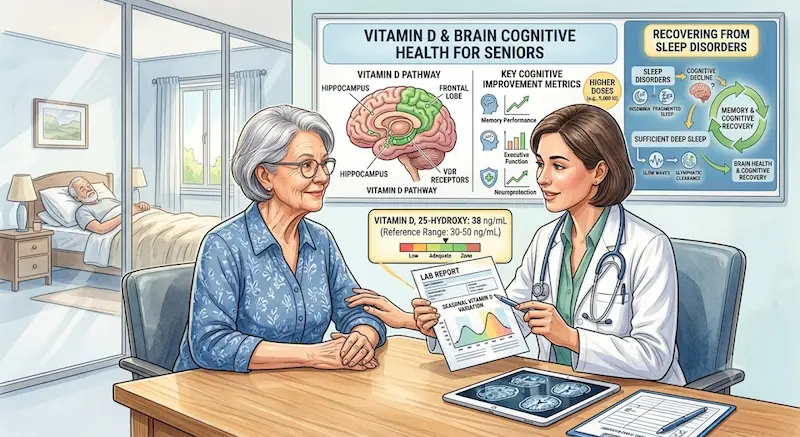
High-Dose Vitamin D Cognitive Function: 5 Key Facts for Seniors
As we age, do you or your loved ones experience a mix of occasional forgetfulness—known as Mild Cognitive Impairment (MCI)—and restless, sleepless nights? These symptoms are often more than simple signs of normal aging; they are widely recognized as critical warning signs that significantly increase the future risk of developing Alzheimer’s disease or dementia.
According to a recent study published in the international academic journal Sleep Medicine by researchers at Emory University in the United States, older adults who consumed a high dose of vitamin d cognitive function supplements (5,000 IU or more daily) experienced a statistically significant 13% increase in their cognitive function scores. When exploring how vitamin d cognitive function is enhanced in older adults, maintaining overall metabolic balance and tracking neurological warning signs are equally important. To learn more, check our guides on Shingles Complications and Treatment Guide and Prediabetes Management and Health Check Guide.
In this comprehensive guide, we will explore the core findings of this Emory University study, how vitamin d cognitive function impacts brain cognition and sleep, and the essential safety precautions and potential side effects to keep in mind when taking high-dose supplements.
1. Emory University Study: The Correlation Between 5,000 IU Vitamin D and Cognitive Function
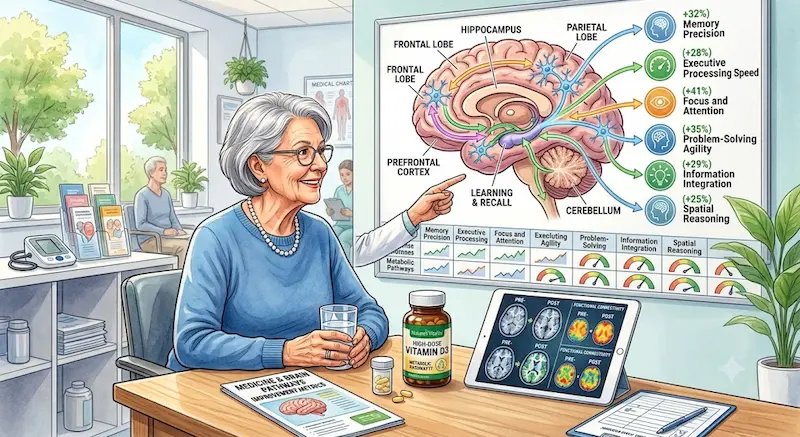
Dr. Victoria Pak, an associate professor at the Nell Hodgson Woodruff School of Nursing at Emory University, led a research team analyzing 54 older adults (with an average age of 67.2 years) who suffered from both mild cognitive impairment and sleep disorders. The goal was to examine the relationship between vitamin d cognitive function intake levels and performance scores.
📌 Key Research Findings Summary
- High-Dose Group (5,000 IU or more): Participants taking 5,000 IU or higher scored an average of 3.78 points higher on the Montreal Cognitive Assessment (MoCA)—representing an improvement of over 13% compared to non-users.
- Low-Dose Group: Groups taking less than 5,000 IU daily showed no statistically significant improvements in cognitive function.
- Vitamin Type Variations: No noticeable differences in efficacy were observed between plant-based vitamin D2 and animal-derived vitamin D3.
2. Why We Must Pay Attention to the “MCI + Sleep Disorder” High-Risk Group
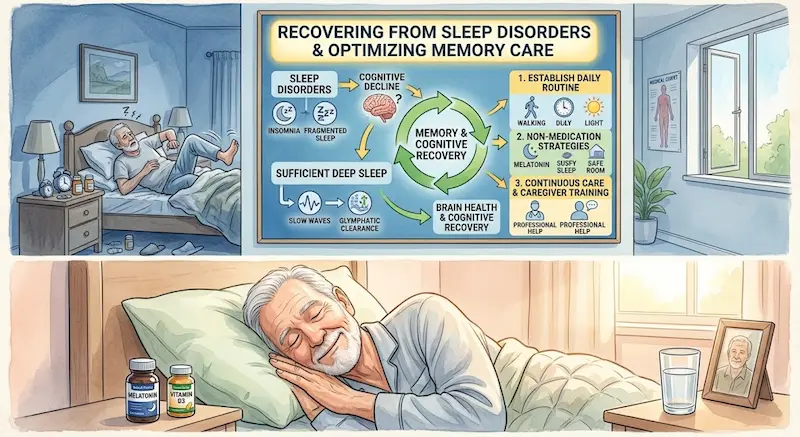
Mild Cognitive Impairment (MCI) is a transitional stage between normal cognitive aging and early-stage dementia. When coupled with a sleep disorder—which hinders the brain’s ability to clear out metabolic waste products like beta-amyloid—the probability of progressing to full-blown dementia surges. For insights on supporting your neurological health, read our article on Shingles Symptoms and the Golden Time Guide.
💡 Insights from the Lead Researcher (Dr. Victoria Pak) “Older adults experiencing both sleep disturbances and mild cognitive impairment are at a critical ‘golden time’ where cognitive changes have begun, but brain health can still be turned around.”
3. Recommended Daily Allowance vs. Tolerable Upper Intake Level
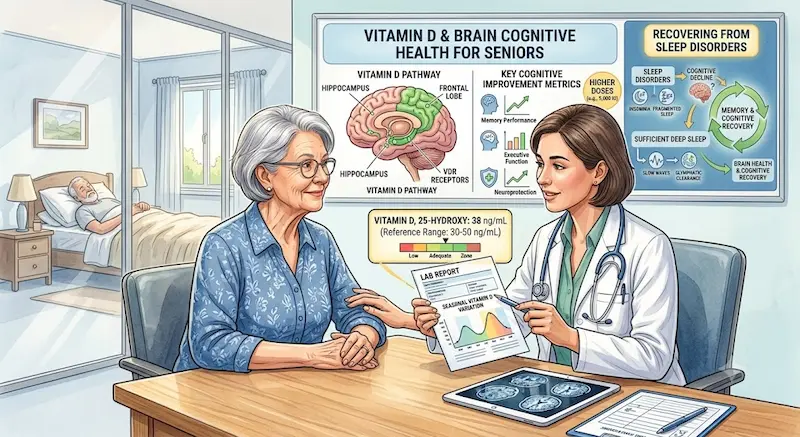
Because vitamin d cognitive function relies heavily on proper bodily regulation, taking excessive amounts requires caution.
- Adequate Intake (AI): 400 ~ 800 IU daily to prevent deficiency.
- Tolerable Upper Limit: 4,000 IU daily as a safe maximum.
- Study Efficacy Dosage: 5,000 IU or more (high dose).
To ensure optimal absorption and bone health, see our guide on Magnesium, Calcium, and Vitamin D Intake Guide.
4. Safe Dosage Guide and Side Effect Prevention
If you are considering a high-dose regimen, strictly follow these safety rules: ① Pre-Testing Serum Levels: Check your blood levels via a simple clinical test to avoid hypercalcemia. ② Co-supplementation: Combine with magnesium and vitamin K2 for safe mineral utilization.
5. Summary and Final Conclusion
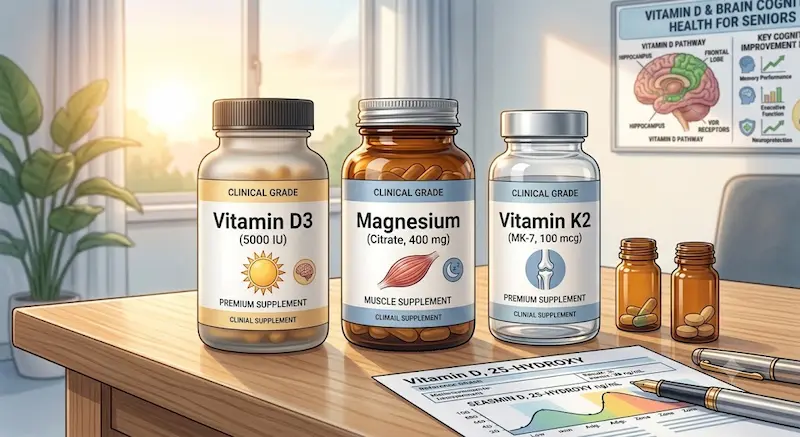
High-dose vitamin d cognitive function supplementation shows positive links to boosting performance in seniors, but always consult a medical professional after routine blood testing. For more wellness insights, visit our Gammab-Health Home page.
Frequently Asked Questions (FAQ)
Q1. Should I take Vitamin D2 or D3?
A1. Animal-derived Vitamin D3 is generally recommended due to superior bioavailability.
Q2. Isn’t getting sunlight exposure enough?
A2. Older adults often experience reduced skin synthesis capacity, making supplementation necessary.
Q3. When is the best time to take vitamin D?
A3. Take it during or right after a meal containing healthy fats, preferably during daylight hours.