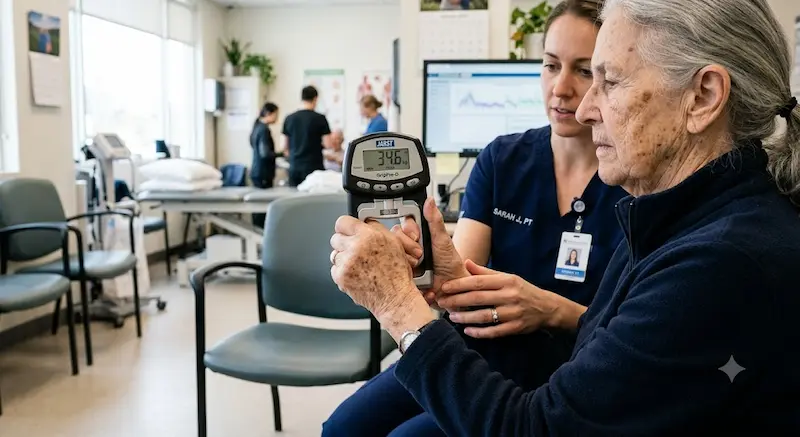
Hand grip strength is far more than a simple test of physical power or an incidental measure of muscular fitness. In modern clinical research and geriatric medicine, grip strength has firmly emerged as a primary, reliable biomarker for evaluating biological age, systemic vitality, and long-term health trajectories. When grip strength drops below established clinical thresholds, the risk of developing severe, age-related muscle loss—known clinically as sarcopenia—surges by up to 85 percent. Understanding this critical measurement, recognizing the underlying physiological mechanisms, and taking proactive steps to maintain hand force provide vital insights into preserving your mobility, independence, and overall quality of life as you age.
- The Deep Biological Link Between Grip Strength and Sarcopenia
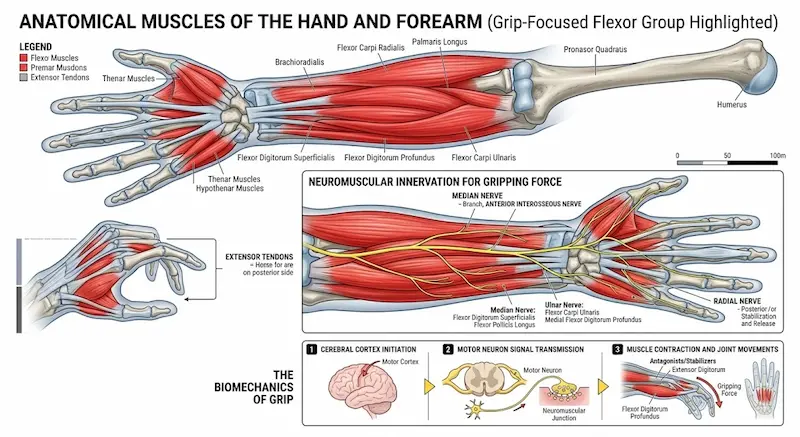
Understanding Muscle Loss, Mass, and Functional Decline Sarcopenia is far more than a normal, passive consequence of getting older; it is a progressive, generalized skeletal muscle disorder characterized by the accelerated loss of muscle mass, muscle quality, and absolute strength. While many people associate aging simply with wrinkles or joint stiffness, the internal decline of skeletal muscle tissue reflects a deep systemic deterioration in neuromuscular integrity, cellular protein synthesis efficiency, and overall metabolic health. Hand grip strength serves as a direct, highly sensitive window into total body skeletal muscle health. Because the act of gripping requires a complex, highly coordinated sequence of central nervous system signaling, peripheral nerve transmission, and functional forearm muscle mass, a weak or declining grip is rarely an isolated problem. Instead, it acts as a clear mirror reflecting systemic neuromuscular degradation throughout the entire body.
Why Grip Strength Drops Precede Major Systemic Health Issues A measurable reduction in hand squeeze force is almost never just an isolated hand or wrist issue. Clinically, it typically serves as an early indicator of widespread, micro-level muscle atrophy that eventually impacts major movement patterns, postural balance, and joint stability. As neuromuscular junctions degrade with age or inactivity, the body loses its fast-twitch muscle fibers first, leading directly to a loss of explosive strength and coordination. When grip strength deteriorates past safe physiological margins, individuals experience a sharply heightened vulnerability to accidental falls, severe fractures, physical disability, and loss of independent living. Tracking this single metric offers an invaluable early warning system, allowing individuals and healthcare providers to detect and combat physical decline years before visible physical impairment or functional dependence occurs.
- How to Accurately Measure and Evaluate Your Grip Strength
Standardized Assessment Using a Handheld Dynamometer Measuring grip strength is a fast, non-invasive, and highly objective procedure when performed correctly using a calibrated digital or hydraulic handheld dynamometer. To ensure that your measurements are clinically accurate and reliable over time, the test must be conducted under strictly standardized conditions:
- Body Positioning: Sit comfortably upright in a standard chair with your feet flat on the floor, shoulders relaxed and adducted (close to the sides of your body), and your elbow flexed at a precise 90-degree angle.
- Execution: Grasp the dynamometer handle firmly and squeeze with maximum possible effort continuously for three to five seconds, avoiding any breath-holding (Valsalva maneuver).
- Trial Management: Test each hand alternately two to three times, ensuring a mandatory 60-second rest period between trials to prevent premature muscle fatigue from skewing the results.
- Data Recording: Record the absolute highest score achieved on either hand, noting whether the measurement was recorded in kilograms or pounds.
- Reference Comparison: Compare your peak performance scores directly against age- and gender-adjusted international reference ranges to determine your relative risk profile.
Recognizing Danger Signals and Clinical Thresholds International sarcopenia working groups and clinical guidelines have established clear, evidence-based diagnostic cutoffs for low muscle strength that signal an immediate need for lifestyle intervention. For men, a grip strength measurement falling below 27 kilograms indicates high clinical risk and requires immediate countermeasures. For women, the established clinical cutoff threshold is set at 16 kilograms. Falling below these critical boundaries means your functional reserve is dangerously low, and targeted interventions should be implemented immediately.
- Practical, Evidence-Based Strategies to Restore Grip Strength

Targeted Resistance Training Exercises for Neuromuscular Drive Reversing age-related muscle decline and restoring robust grip force requires consistent, progressive resistance training that explicitly challenges neural drive, tendon resilience, and muscle architecture. General aerobic walking or light stretching is insufficient; you must introduce mechanical tension through compound movements that naturally engage the intricate network of forearm flexors, hand intrinsics, and core stabilizers:
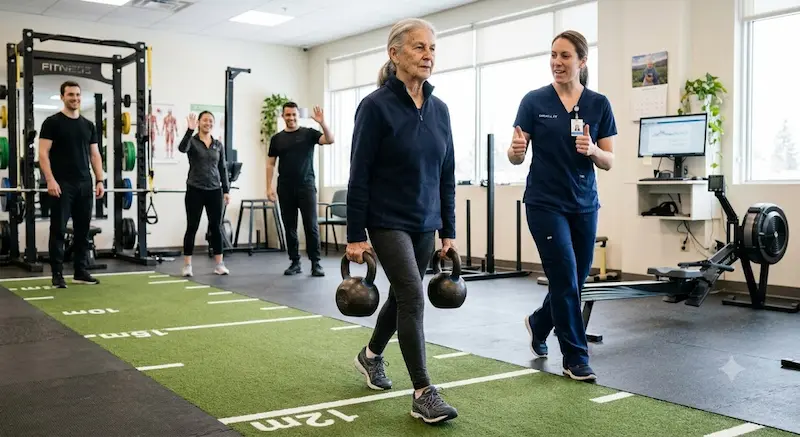
- Farmer’s Carries: Pick up heavy dumbbells, kettlebells, or specialized load bars, keeping your chest proud, shoulders locked down, and core braced. Walk with a slow, controlled, upright posture for set distances to build immense grip and trap endurance.
- Dead Hangs: Grab a stable pull-up bar using a firm overhand grip and hang passively or actively with engaged shoulders for 20 to 60 seconds at a time. This decompresses the spine while aggressively challenging finger and forearm tendon strength.
- Plate Pinches: Take two smooth, flat weight plates, sandwich them together with your fingers on one side and thumb on the other, and hold them vertically for time. This isolates pinch grip strength, which relies heavily on thumb adductor power.
Targeted Nutritional Interventions for Muscle Protein Synthesis Physical exercise alone cannot rebuild lost tissue; targeted resistance training must be robustly supported by optimal, high-quality nutrition to stimulate muscle protein synthesis effectively. As humans age, the body develops a phenomenon known as anabolic resistance, meaning older adults require significantly higher doses of dietary protein and specific amino acids like leucine to trigger the same muscle-building response as younger individuals. To combat this effectively, aim for a daily dietary protein intake ranging between 1.2 to 1.5 grams of high-quality protein per kilogram of body weight, evenly distributed across your daily meals.
- Frequently Asked Questions (FAQ)

Q1. Why is grip strength considered a vastly superior indicator of overall health compared to general muscle mass measurements? A1. While general muscle mass tells you the sheer volume of tissue present, grip strength measures active muscle quality, nervous system efficiency, and functional neuromuscular integration. Because nerve-to-muscle communication degrades before bulk volume visibly disappears, functional force production serves as a far more accurate, sensitive predictor of biological age, functional longevity, and clinical health outcomes.
Q2. Can older adults successfully rebuild grip strength and reverse functional decline after experiencing years of significant muscle loss? A2. Yes, absolutely. Human skeletal muscle tissue and central nervous system pathways retain a remarkable degree of plasticity even well into advanced age. Through structured, progressive resistance overload training, adequate daily protein intake, and sufficient recovery, older adults can consistently stimulate muscle hypertrophy, enhance neural recruitment pathways, and significantly improve absolute force production.
Q3. How frequently should grip strength be measured to effectively track health changes and intercept physical decline early? A3. For general health monitoring, checking your grip strength using a standard dynamometer every three to six months is ideal. This specific timeframe provides a wide enough window to filter out daily fluctuations in fatigue or hydration, allowing you to observe meaningful long-term trends and detect any subtle signs of physical decline before they impact your daily mobility.
The Power of Protein: A Guide to Preventing Muscle Loss
Nutrition is the foundation of muscle synthesis. Learn how to optimize your daily protein intake to combat sarcopenia effectively. Top 5 Lower-Body Strength Exercises to Prevent Falls in Seniors
Building grip strength is only the start. Learn the essential lower-body exercises that will improve your balance and prevent mobility-limiting accidents. Small Daily Habits for Sustained Vitality After 50
Beyond formal exercise, discover how simple, consistent lifestyle adjustments can significantly boost your energy and functional health as you age.