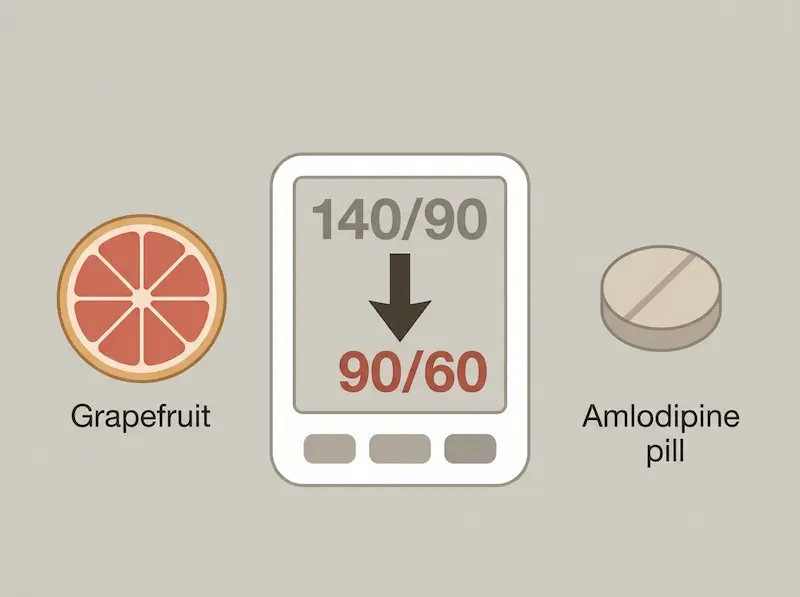
Amlodipine and grapefruit are one of the most common dangerous combinations on American kitchen tables. The blood pressure drop is real, the dizziness is real, and most doctors never bring it up.
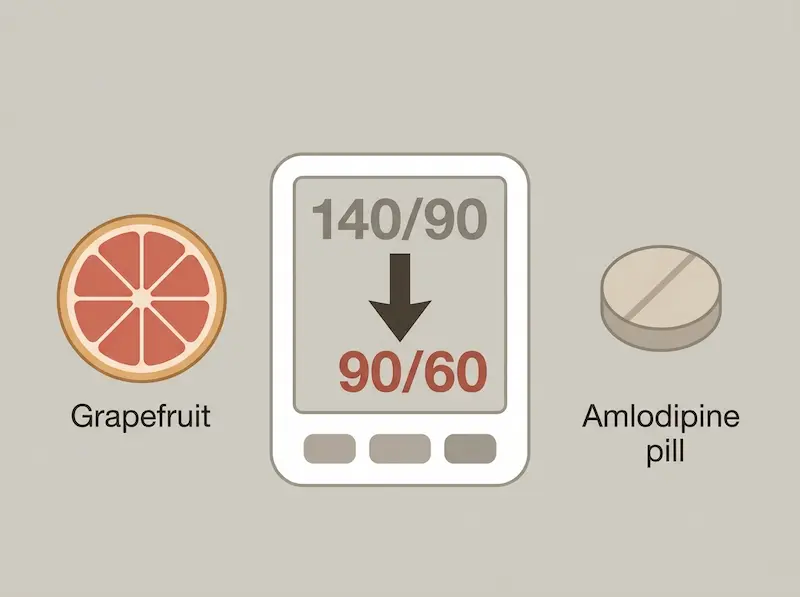
A customer walked into my store last spring. Sixty-eight years old, retired teacher, careful about her health. She had been taking amlodipine for four years without any problem. Then one Tuesday morning she stood up from the breakfast table and the kitchen tilted sideways. She caught the counter on the way down. Her husband drove her to the ER. Blood pressure was 82 over 54.
The ER doctor asked the usual questions. New medication? No. Skipped breakfast? No. Sick recently? No. She mentioned almost as an afterthought that she had started drinking grapefruit juice that month because her daughter said it was healthy. The doctor nodded and wrote it down. He did not explain why. She came to my store two weeks later asking me what happened, because nobody at the hospital had told her.
This is the kind of story I have heard more times than I can count. After thirty years of office work, I have watched friends and coworkers go on blood pressure medication one by one. Most of them have no idea about the grapefruit problem. The combination of amlodipine and grapefruit is not rare, the consequences are not small, and the warning is almost never given at the pharmacy counter. I wrote about the broader issue in my complete guide to grapefruit and medications. This article is the deeper version of the amlodipine chapter.
Why Amlodipine Specifically
Amlodipine belongs to a class of drugs called calcium channel blockers. It lowers blood pressure by relaxing the muscles in your blood vessel walls, which lets the vessels widen and the pressure inside drop. It is one of the most prescribed medications in the United States, with more than seventy million prescriptions written each year.
The reason amlodipine and grapefruit interact so strongly is that amlodipine is broken down almost entirely by an enzyme called CYP3A4. This enzyme lives in the small intestine and the liver, and it normally removes about half of every dose before it reaches your bloodstream. When you drink grapefruit juice, the compounds in the juice called furanocoumarins shut that enzyme down. The medication is not broken down at the normal rate. It accumulates.
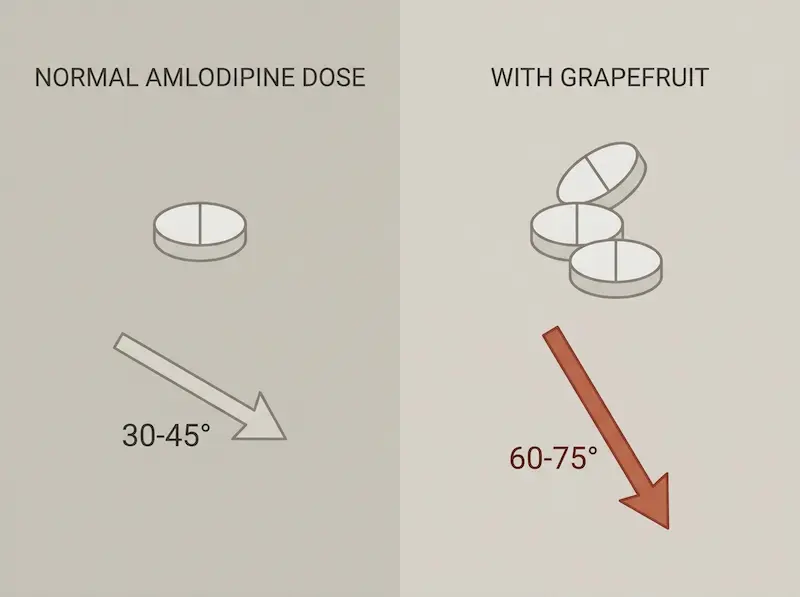
Studies have shown that a single glass of grapefruit juice can raise amlodipine blood concentration by fifty to two hundred percent. In some people, the effect is even larger. The dose printed on the bottle is no longer the dose your body is dealing with. One pill behaves like two or three. The blood vessels relax more than they were meant to. The pressure drops further than it should.
What Actually Happens in Your Body
The drop in blood pressure does not always happen the same day. Amlodipine has a long half-life, around thirty to fifty hours, which means it builds up slowly over a week of daily dosing. If you start drinking grapefruit juice in the middle of that cycle, the concentration keeps climbing for several more days before it peaks.
This is why the symptoms feel random. You might drink grapefruit juice on Monday and feel nothing. By Thursday you stand up too fast and the room moves. By Saturday you almost fall in the shower. The combination of amlodipine and grapefruit does not behave like a normal cause and effect. The cause is days behind the effect.
The Symptoms Nobody Warns About
The most common warning sign is dizziness when standing up. Doctors call this orthostatic hypotension. The blood pressure drops too quickly when you change position, and your brain briefly loses enough blood flow to make you unsteady. Most people describe it as the room tilting, or feeling like they need to grab something.
The second common sign is a dull headache that does not respond to normal pain relievers. The blood vessels in the head are dilating more than they should, and the pressure change creates a heavy, foggy feeling. People often blame the weather or poor sleep.
The third sign is swelling in the ankles getting worse. Amlodipine already causes some ankle swelling in many users because the small blood vessels relax and fluid pools in the lower legs. When grapefruit triples the effective dose, the swelling can become noticeable within days.
The most dangerous sign is fainting. This is rare but real, and it is far more dangerous in older adults because a fall can break a hip. A broken hip after sixty-five carries a one-year mortality rate of around twenty percent. This is not a small medical event. The cortisol and stress response that follow a fall can also disrupt sleep for weeks, which I wrote about in my article on waking up at 3 AM.
How Long You Need to Wait
The common advice you hear from pharmacists is to separate amlodipine and grapefruit by four hours, sometimes twelve. This is wrong, and it is wrong in a way that matters.
Grapefruit does not just compete with amlodipine in your stomach. It permanently disables the CYP3A4 enzyme molecules it touches. Your body has to manufacture new enzyme to recover. That manufacturing process takes time. Research has shown the enzyme begins recovering within twenty-four hours, but full recovery takes up to seventy-two hours.
This means a single glass of grapefruit juice on Monday morning can still be affecting your amlodipine dose on Wednesday evening. The four-hour rule and the twelve-hour rule are both myths. If you are on amlodipine, there is no safe daily window for grapefruit. The only safe approach is to remove grapefruit from your diet, or to switch to a blood pressure medication that does not interact.
I covered the full timing question in the grapefruit and medications guide, including pomelo and Seville oranges which most people do not realize carry the same risk.
Safer Alternatives
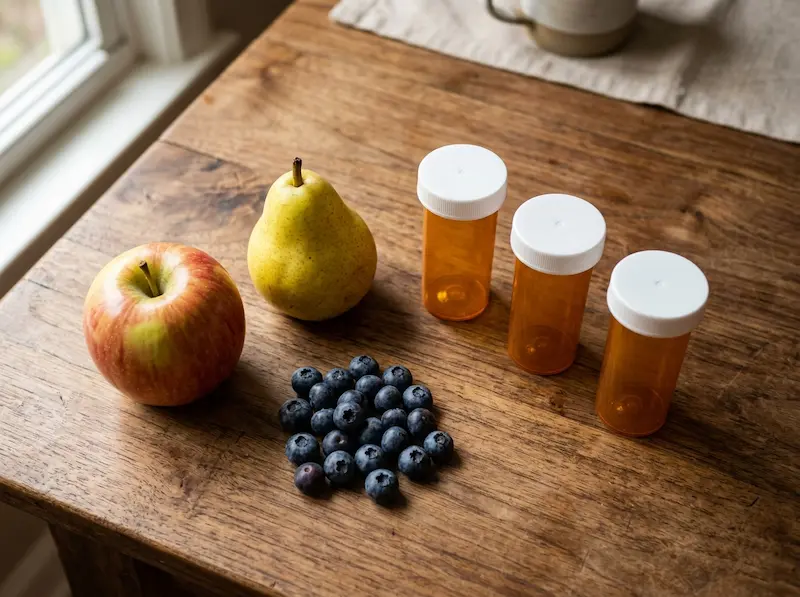
The good news about amlodipine and grapefruit is that you have real options. Calcium channel blockers are not the only class of blood pressure medication. ACE inhibitors like lisinopril and enalapril do not have a meaningful grapefruit interaction. ARBs like losartan and valsartan are also safe with grapefruit. Beta blockers like metoprolol have a small interaction but it is far less dangerous than the amlodipine version.
This is a real conversation to have with your doctor. If you have been on amlodipine for years and you genuinely love grapefruit, switching to losartan or lisinopril is not a downgrade. The blood pressure control is comparable for most people, and the grapefruit can stay on the breakfast table.
On the fruit side, the safer options are apples, pears, blueberries, strawberries, watermelon, and most stone fruits. Oranges are safe. Tangerines are safe. The dangerous citrus list is limited to grapefruit, pomelo, and Seville oranges. If marmalade is on your toast, check the jar, because most British-style marmalade is made from Seville oranges.
One more note. Alcohol amplifies the blood pressure drop from amlodipine even without grapefruit. During my thirty years of office work and frequent business dinners, I saw many colleagues on blood pressure medication who continued drinking heavily at company events. I wrote about that pattern in my article on drinking for thirty years to survive work. The grapefruit problem and the alcohol problem stack on top of each other.
The Honest Answer About Your Next Step

People ask me whether they should stop the grapefruit or switch the medication. As someone who sells supplements for a living and has watched many customers navigate this question, I will give you the honest answer that does not always come from a clinic.
If grapefruit is a small part of your life, just stop the grapefruit. It is the simpler change, the cheaper change, and the change that does not require a new prescription. Add pomelo and Seville oranges to the same list. The question of amlodipine and grapefruit has only two real answers, not three.
If grapefruit is something you genuinely love and have eaten daily for decades, talk to your doctor about switching to losartan or lisinopril. The blood pressure control is comparable for most people, the grapefruit can stay, and the muscle pain risk that comes with statin interactions is not a factor here. This is a real option, not a compromise.
What is not a real option is the four-hour rule, the twelve-hour rule, or the idea that one glass of juice a day cannot really matter. The enzyme biology says otherwise. The customer with the kitchen-floor fall said otherwise. The combination is genuinely dangerous, and the danger is almost entirely preventable with one of two clear choices.
For the official prescribing information, the NIH MedlinePlus page on amlodipine lists the grapefruit warning, but the wording is mild enough that most people skim past it. The warning deserves more weight than the printed paragraph gives it.
Disclaimer: This article is based on personal experience as a supplement store owner and is not medical advice. Amlodipine is a prescription medication and any changes to your regimen must be discussed with your doctor or pharmacist. If you are experiencing dizziness, fainting, or severe ankle swelling, contact your healthcare provider immediately. The information above does not replace professional medical guidance for individuals with heart disease, kidney disease, or other underlying conditions.